Candle care: Wick trimming, burn time, and common problems
Understand the checks that matter and what to do about uneven wax, smoke, or a scent that seems faint.
By Pearley · Founder of Scentamy · 6 min read
Read your candle’s safety label before lighting. Prepare the wick as instructed and place the candle on a stable, heat-resistant surface away from anything that can burn. Stay nearby while it burns and extinguish it before leaving or sleeping. For burn time and when to stop using the candle, follow the instructions for that particular product.
The key steps
- Prepare the cool, unlit candle. Check the container, remove loose debris, and trim the wick as its label instructs.
- Choose a safe location before lighting. Use a stable, heat-resistant surface away from combustible items, drafts, children, and pets.
- Supervise the entire burn. Respect the product’s time limit, even if wax has not melted to every edge.
- Respond to warning signs before trying a fix. Extinguish safely for persistent smoke or an unusual flame; stop using a damaged container.
- Extinguish fully and let it cool. Never use water, and follow the maker’s storage and stop-use instructions.
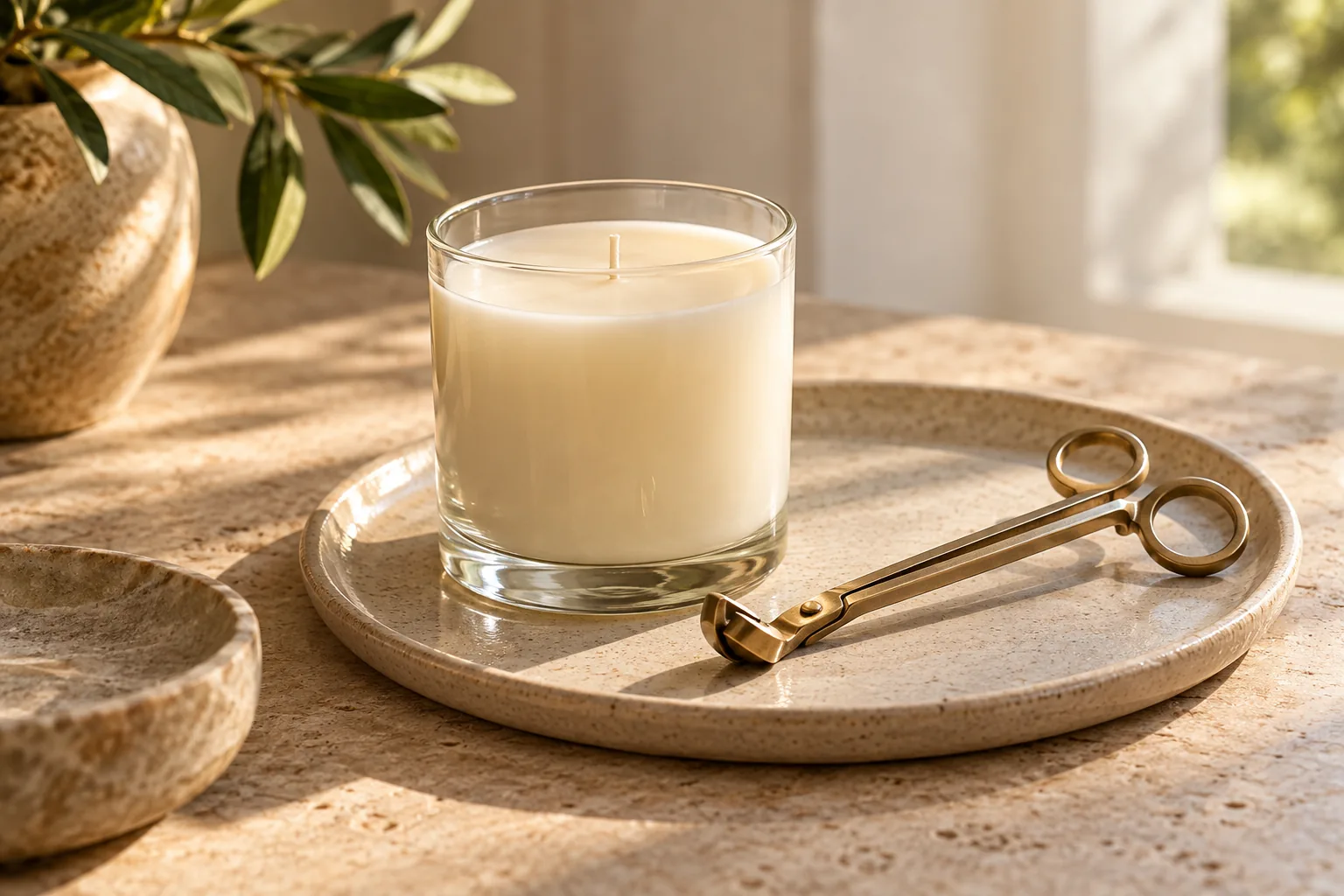
Candle-care terms can make a simple task feel confusing. The wick is the part you light; the melt pool is the liquid wax around it. The sections below explain what to check and distinguish an appearance issue from a reason to stop burning.
How should I prepare the wick?
Work only on a cool, unlit candle. Check the label for its specified trim length and remove loose wick pieces or other debris before lighting. A long or poorly prepared wick can contribute to smoke and an excessive flame.
The National Candle Association gives a quarter inch as general trimming guidance. Follow the maker’s instructions for your wick, and ask if the required preparation is unclear.
Where should I put the candle?
Use a stable, heat-resistant surface clear of combustible objects, children, and pets. Avoid drafts from fans, vents, or open windows. A surface that might be bumped or a place near a moving curtain is unsuitable.
The National Candle Association advises at least 12 inches of clearance from flammable items. Choose the location before lighting, and do not move the candle while its wax is liquid.
How long should I burn it, including the first time?
Follow the maker’s burn-time instructions from the first session onward. The first burn deserves preparation, but it does not give permission to exceed the stated limit.
You may see advice to burn until the melt pool reaches the edge. Do not extend the session beyond the product’s limit to achieve that appearance. If you regularly have less supervised time than the candle needs under its instructions, ask the maker whether it suits that routine.
What is tunnelling, and does edge wax always mean a problem?
Tunnelling describes a candle burning down through the centre while leaving wax around the sides. Some wax at an edge during a session is not enough to determine the cause or the right response.
Describe what you see: how much wax remains, whether it is on one side or all around, and what happened over successive sessions. Ask the maker before attempting a remedy. Do not use improvised foil covers or extra heat.
Once cool, check the container for damage and review whether its previous placement was exposed to moving air. Remove only loose debris as instructed; do not dig wax out, alter the wick, or change the container to force a different burn. Report anything you cannot assess from the label.
- What you notice
- Wax remains around an edge
- What to do
- Photograph it after cooling and ask the maker with the session details
- What you notice
- Persistent smoke or an unusually high flame
- What to do
- Extinguish safely and get guidance before relighting
- What you notice
- A crack or other container damage
- What to do
- Stop using the candle
- What you notice
- Wax has reached the specified stop-use level
- What to do
- Finish using it rather than burning the remaining wax
| What you notice | What to do |
|---|---|
| Wax remains around an edge | Photograph it after cooling and ask the maker with the session details |
| Persistent smoke or an unusually high flame | Extinguish safely and get guidance before relighting |
| A crack or other container damage | Stop using the candle |
| Wax has reached the specified stop-use level | Finish using it rather than burning the remaining wax |
What if I can barely smell the candle?
“Scent throw” means how noticeable the candle’s fragrance is in the surrounding space. A faint impression does not tell you, by itself, whether the problem is the product, its placement, or a mismatch with the room.
Check the intended setting on the product information. Tell the maker the room, placement, and session length, along with when you notice the scent. Do not exceed the burn-time limit to make it stronger.
How do I extinguish and store it?
Use the recommended extinguishing method, never water. Check that the flame is fully out and allow the candle to cool completely before handling. Keep the wax free of debris and store it according to the product’s directions.
Observe the stated stop-use level even when wax remains. If the label is missing or unreadable, contact the maker for the instructions rather than guessing. Keep the care information with the candle for the next session.
Example: asking about wax left along one side
After a session within the stated burn limit, wax remains along one side of the container. Before the next session, let the candle cool and review its label, the wick preparation, and the location where it stood.
If it was near a fan or vent, choose a suitable draft-free location before any later use. If you also saw persistent smoke or an unusually high flame, get guidance before relighting. A damaged container is a stop-use issue, not an appearance problem to fix.
For wax remaining without those warning signs, send the maker a photo after cooling, the burn duration, and the placement details. This separates an observable problem from a guess about its cause and gives them enough information to advise on that candle.
Follow the candle’s burn limit even when the wax has not melted to every edge.
The checks to repeat each session
- Check the container and prepare the cool wick as instructed.
- Remove debris and choose suitable placement.
- Remain nearby and respect the stated burn limit.
- Extinguish fully and allow it to cool before handling.
- Stop using it at the maker’s specified level or if the container is damaged.
References
Choosing your next candle
When choosing a candle, read the care instructions and size alongside the scent description. Pick one that fits the space and the supervised sessions you have in mind.
Browse Scentamy