Fragrance sampling: How to compare scents and choose a favourite
A step-by-step way to compare wearable fragrances without losing track of what you liked.
By Pearley · Founder of Scentamy · 6 min read
When choosing between fragrances, smell each one separately and write down what you like or dislike. Begin with two or three labelled samples. “I like the citrus, but this is too sweet for me” is enough to remember the difference. Then try your favourite on its own according to its directions, and notice how it smells later before deciding.
The key steps
- Choose two or three samples and label them. Keep the selection small enough to remember what you liked.
- Smell each one separately and make a short note. Write what it reminds you of, what you enjoy, and what you would change.
- Try your favourite on its own. A scent strip helps narrow the choice; follow the product’s directions for a wearable sample.
- Return to the fragrance later. Keep your first impression and add a second so you can see whether your preference changes.
- Choose the scent you want to wear again. Use enjoyment and intended use to decide, rather than picking the strongest first smell.
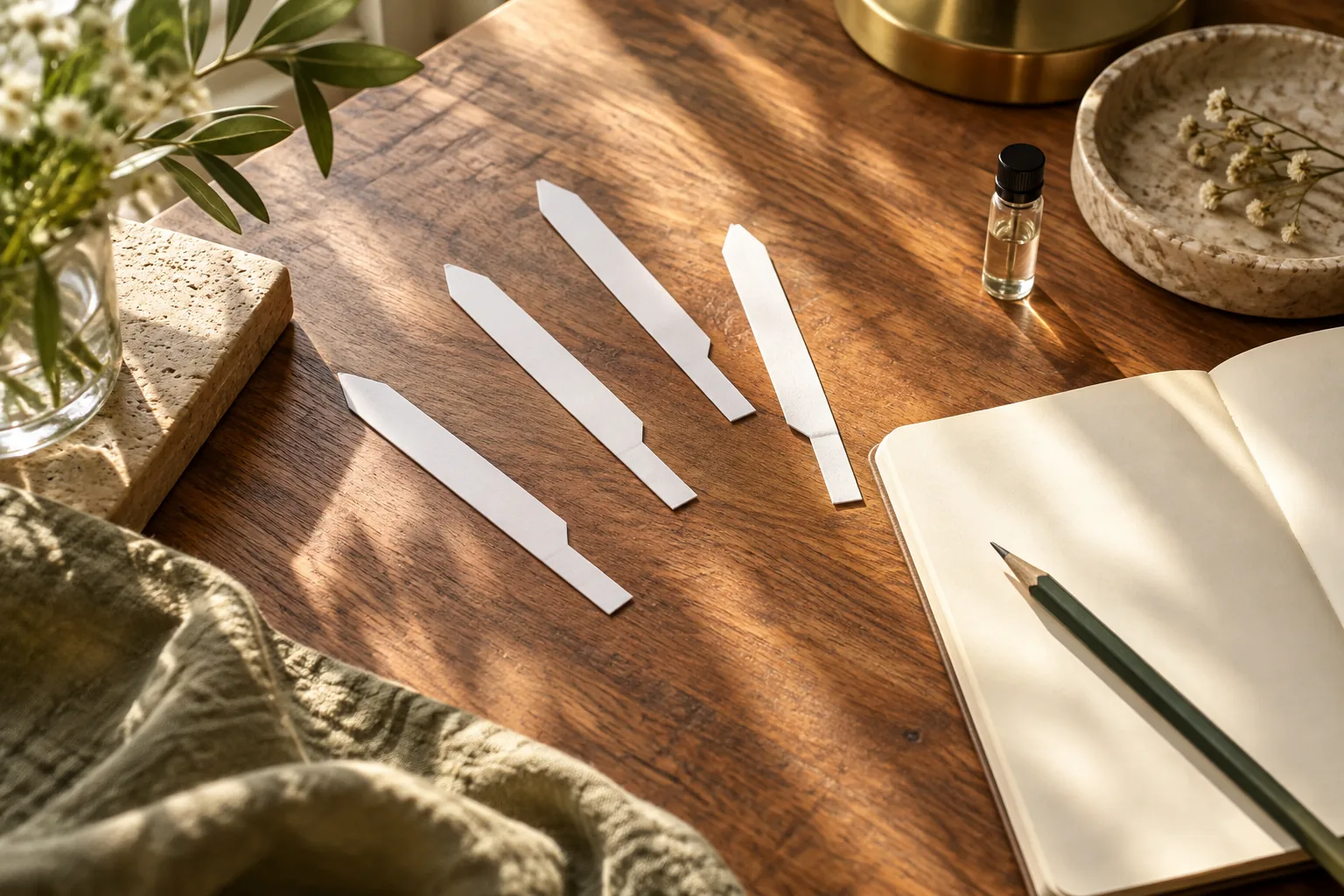
This guide focuses on perfume and body mist. Sampling a candle in a room is a different experience. For wearable fragrance, separate the task into two parts: narrow your choices, then decide which one you enjoy wearing.
How many fragrances should I compare at once?
Begin with two or three as a manageable starting point. If you open every sample at once, remembering which one you preferred becomes harder. Choose options that answer your question: a fresher everyday fragrance, a less sweet scent, or simply two products you are curious about.
Label strips or samples before smelling them. A name and a short note are enough. If the scents become hard to distinguish, take a break and return another time rather than adding more.
What should I write down about each fragrance?
Write two things beside each name: what you notice and whether you enjoy it. “Citrus with a sharp edge; too sharp for everyday wear” gives you a reason to explore a softer citrus fragrance. A score such as “7 out of 10” does not explain the choice on its own.
Use the same questions for every sample: What does it remind me of? What do I enjoy? What would I change? Keep your first note, then add a later note so you can see whether your preference changes. The comparison below shows possible notes, not test results for particular products.
- Sample
- A: citrus direction
- First impression
- Bright citrus; enjoy the freshness
- Later impression
- Now feels sweeter than I want
- Reason for the next step
- Try a less sweet option rather than choosing from the opening
- Sample
- B: floral direction
- First impression
- Soft flowers; less attention-grabbing
- Later impression
- Still enjoy the floral smell
- Reason for the next step
- Try wearing this sample on its own
- Sample
- Neither
- First impression
- Some qualities appeal in both
- Later impression
- Neither makes me want to wear it
- Reason for the next step
- Keep the useful notes and sample another option
| Sample | First impression | Later impression | Reason for the next step |
|---|---|---|---|
| A: citrus direction | Bright citrus; enjoy the freshness | Now feels sweeter than I want | Try a less sweet option rather than choosing from the opening |
| B: floral direction | Soft flowers; less attention-grabbing | Still enjoy the floral smell | Try wearing this sample on its own |
| Neither | Some qualities appeal in both | Neither makes me want to wear it | Keep the useful notes and sample another option |
Need help describing the smell? Read fragrance families and scent notes explained.
Is a scent strip enough to decide?
A strip is useful for an initial comparison where the product permits this sampling method. Keep one fragrance per strip so you can return to each separately. Do not judge every option while another sample is held directly beside it.
A strip does not answer every question about wearing the fragrance. Once you have a favourite, follow its directions for sampling on skin. Try it on its own so another fragrance does not make it difficult to tell what you are judging.
Why should I smell the fragrance again later?
The first smell is sometimes called the opening. The smell after the fragrance has settled is often called the dry-down. These words describe stages of the experience, rather than two different products.
Keep your first note and add another later. “Bright citrus at first; sweeter and more woody later” tells you how your impression changed. You may love the opening but dislike the later smell, which matters if you are choosing something to wear.
You do not need a fixed timetable to make your preference valid. Check back during the period you actually spend wearing it, and ask whether you still want that smell around you.
Should I choose the strongest fragrance?
Strength and enjoyment are separate questions. A fragrance can be very noticeable without being your favourite. Decide whether you like the smell before treating intensity as an advantage.
Think about the setting too. If you want something for ordinary daily wear, ask whether the sample feels comfortable for you and appropriate around the people sharing that space. Follow the application directions rather than trying to make every sample equally strong.
How do I know I am ready to buy?
You are closer to a decision when you can say both what you enjoy and when you would wear it. “I like the soft floral smell later on, and I would choose it for most days” is a clear reason.
If you cannot sample, read the full description and check whether samples and suitable returns are available. Descriptions help narrow the possibilities, but they cannot guarantee your reaction. Keep the shortlist small and understand the purchase terms before committing.
Example: choosing between a bright citrus and a softer floral
You are choosing an everyday fragrance and comparing two samples. One smells bright and citrus-like at first; the other feels softer and floral. The citrus catches your attention, but you do not want to decide only from that first impression.
Keep separate notes for the first smell and the later smell. The table above shows how those notes can lead to a decision. A fragrance you admire initially may not be the one you want to keep wearing; a quieter first impression may become your favourite.
If you prefer the later floral impression, try that product on its own according to its directions before purchasing. If neither feels right when worn, keep the useful preferences you learned and choose another sample. You do not have to buy a winner from the original pair.
Write what you smell and how you feel about it. You need both to make a useful comparison.
Your fragrance sampling checklist
- Choose a small selection that interests you.
- Label every sample before comparing.
- Write one description and one preference for each.
- Try the favourite on its own according to its directions.
- Return later and decide whether you would want to wear it again.
Fragrances to add to your shortlist
Once your notes show a direction you enjoy, explore wearable products with that character. Check whether a sample is available before committing to an unfamiliar fragrance.
Browse Scentamy