Your scent style: How to discover the fragrances you enjoy
Turn familiar smells and past purchases into a clear description of your fragrance preferences.
By Pearley · Founder of Scentamy · 5 min read
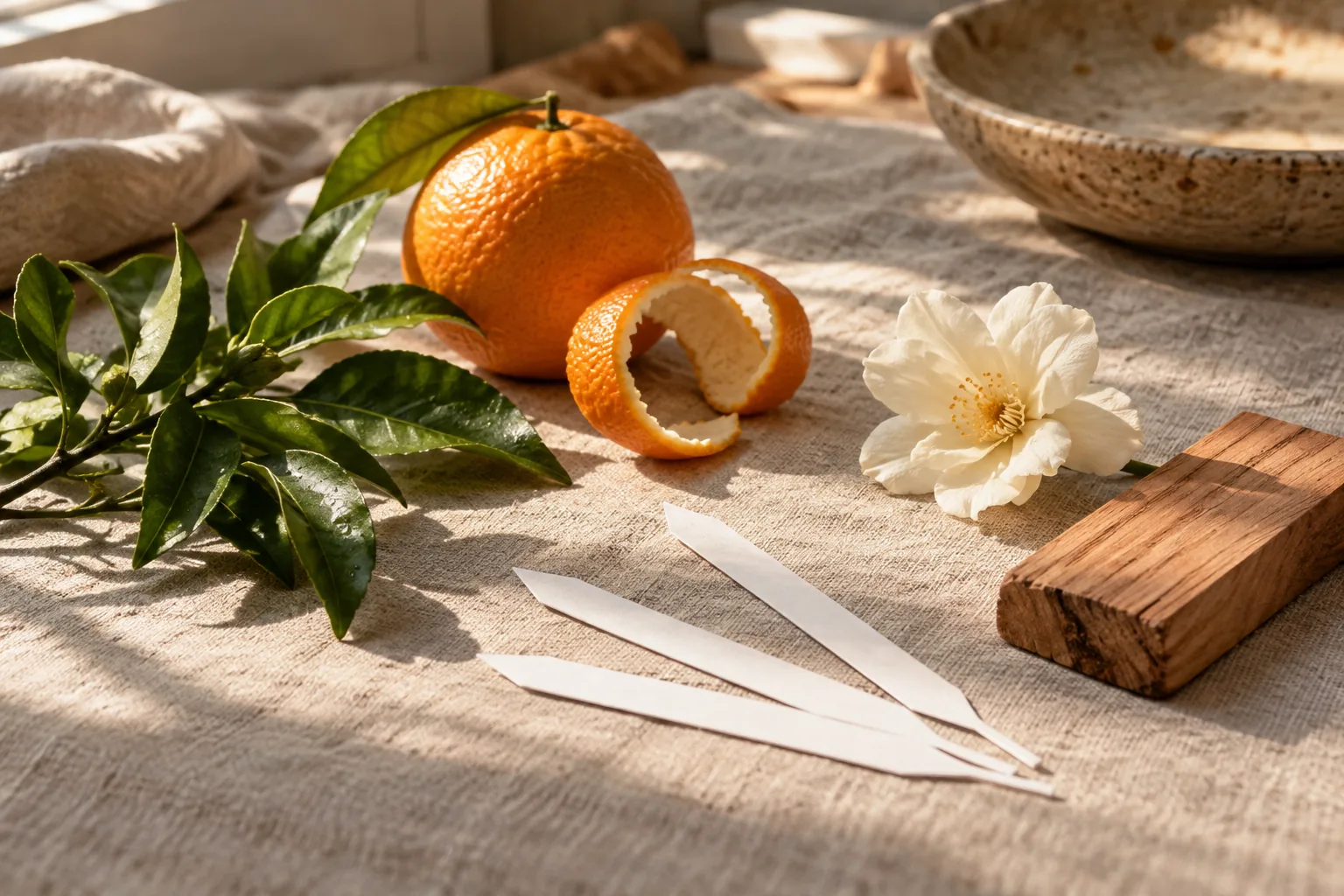
Start with a smell you know you enjoy, such as orange peel, garden roses, or dry wood. Ask what you like about it, then add something you prefer to avoid. “I like fresh, leafy flowers, but not very sweet florals” is already a useful description. It gives you a clearer way to choose samples than saying only that you like nice smells.
The key steps
- Name a few familiar smells you enjoy. Start with things you recognise, such as citrus peel, herbs, flowers, or wood.
- Explain what you like about each smell. “Fresh and leafy” tells someone more than simply “I like flowers.”
- Identify one quality you prefer to avoid. Use past dislikes to make the next choice more specific.
- Say how you want to use the fragrance. Keep wearable and home fragrance preferences separate.
- Combine those details into a clear request. Use that description to choose samples, then refine it after smelling them.
Finding your preferences does not require a signature scent or a permanent label. You are learning which details make a fragrance enjoyable for you. Those details can also help you explain your taste to someone recommending products.
What if I do not know any fragrance terminology?
Begin with everyday smells. Think about fruit peel, flowers, herbs, wood, or a fragranced product you already enjoy. Choose two or three you can recognise easily.
Describe what attracts you. With orange peel, you might like the sharp freshness. With roses, you might prefer the leafy garden smell to a sweeter floral product. These differences are useful even if you cannot name a single perfume ingredient.
How do I describe what I like more precisely?
After naming a favourite smell, ask what part appeals to you. With orange peel, you might enjoy freshness but dislike bitterness. With a cedar drawer, you may prefer the dry wood smell to something smoky. These distinctions help someone recommend a fragrance without guessing what “fresh” or “warm” means to you.
Compare your favourites with each other. If several appeal because they feel less sweet, that is a useful thread to follow. If they have little in common, keep separate preferences rather than forcing them into a single style.
- Broad statement
- I like fresh fragrances
- A clearer preference
- I enjoy citrus peel more than a laundry-like smell
- Broad statement
- I like flowers
- A clearer preference
- I prefer leafy florals to very sweet ones
- Broad statement
- I like vanilla
- A clearer preference
- I enjoy a soft vanilla smell, but not a sugary dessert impression
| Broad statement | A clearer preference |
|---|---|
| I like fresh fragrances | I enjoy citrus peel more than a laundry-like smell |
| I like flowers | I prefer leafy florals to very sweet ones |
| I like vanilla | I enjoy a soft vanilla smell, but not a sugary dessert impression |
For definitions of floral, woody, powdery, and other terms, read the scent-language guide.
What can a fragrance I dislike teach me?
Identify the part you disliked rather than rejecting every scent with the same note. If a rose perfume felt too powdery, you may still enjoy a greener rose fragrance. If a citrus sample felt too sharp, another citrus fragrance may appeal.
A past purchase can help too. Ask whether you disliked the smell itself, how noticeable it was, or the way you had to use it. Those are different problems and lead to different choices.
Can I like different scents for wearing and for home?
Yes. Enjoying a sweet candle does not mean you want that smell on your skin all day. Describe your preferences separately for wearable fragrance and home fragrance.
For example, you might say, “For perfume I want a fresh floral; for a candle I enjoy a sweeter vanilla.” This avoids asking one general preference to answer two different decisions.
What should I say when asking for a recommendation?
Include three things: a smell you enjoy, a quality you avoid, and the intended use. “I want a wearable fragrance with leafy flowers and less sweetness” is enough to begin a helpful conversation.
My advice is to bring the name of a favourite product as well, if you have one, but explain why you like it. The name alone does not tell someone whether the citrus, sweetness, or woody finish is the part you want to find again.
How do I use my preferences when shopping?
Read full descriptions, looking for both the familiar smell and the qualities around it. If you prefer leafy flowers, a description that emphasises green leaves may be worth sampling; one that emphasises sweet powderiness may be less promising.
Treat the description as a starting choice, then let actual sampling refine it. You can enjoy a surprise without abandoning everything you have learned. The aim is to make the next choice easier, not to restrict yourself to one family forever.
Example: turning three familiar smells into a useful request
You enjoy orange peel, basil leaves, and the smell of a cedar drawer. Rather than naming three ingredients you expect a perfume to contain, ask what connects those preferences: citrus freshness, a leafy smell, and dry wood without much sweetness.
A useful request would be: “I would like a wearable fragrance that feels citrus-like or leafy, with dry woods and less sweetness.” That leaves room for several compositions while making the qualities you want clear.
If a citrus sample feels too sharp, revise the request to include softer citrus. You have learned about an unwanted quality, rather than disproved your preference for freshness. Keep the parts of the description that still help.
The most useful preference names both what you enjoy and what you would change.
A clear way to describe your taste
- Name two or three familiar smells you enjoy.
- Explain the quality you like in each.
- Name one quality you often dislike.
- Say whether you want wearable or home fragrance.
- Use that description to select samples, then refine it from experience.
Explore fragrances using your preferences
Look for descriptions that reflect the qualities you enjoy, then read the rest of the scent story. A familiar note can catch your attention; the overall character helps you narrow the choice.
Browse ScentamyRelated reading
- Scent language: Fragrance families and notes explained
- Fragrance sampling: How to compare scents and choose a favourite
- Fragrance gifting: How to choose a scent they will enjoy
- Jasmine scents: Understanding different floral impressions
- Vanilla scents: Choosing between sweet and softer impressions
- Woody scents: Understanding dry, soft, and smoky descriptions