Jasmine scents: Understanding different floral impressions
Learn why jasmine fragrances can feel leafy, sweet, soft, or rich, and choose the qualities you enjoy.
By Pearley · Founder of Scentamy · 6 min read
A jasmine note describes a jasmine-like floral smell within a fragrance. It does not describe the whole product or reveal its ingredients. To choose a jasmine fragrance, read what surrounds the flower in the description: leaves, sweetness, powderiness, citrus, or woods can point to different experiences. Decide which of those qualities you want before choosing a sample.
The key steps
- Start with the floral reference. Jasmine is one impression within the finished fragrance.
- Read the qualities around the flower. Leafy, sweet, powdery, and woody descriptions suggest different directions.
- Identify what felt overwhelming. Separate sweetness, intensity, and floral character.
- Choose separately for wearing and home use. Enjoying a floral room scent does not settle wearable preference.
- Use a specific request. Name jasmine plus the qualities you want and avoid.
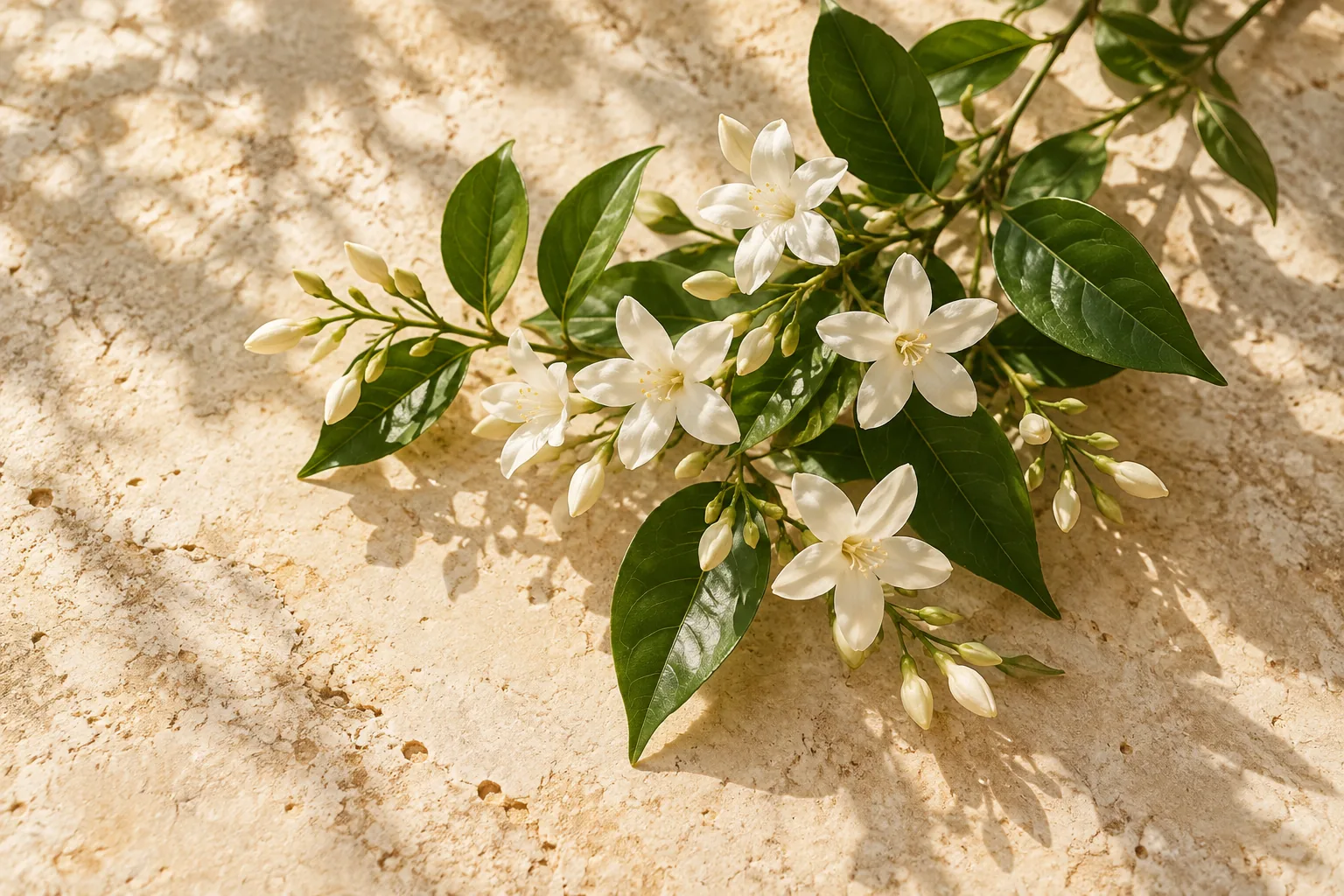
This is scent-level education. You do not need to know an oil name or formula to understand the public description and make a more informed choice.
What does a jasmine note tell me?
It tells you the maker is describing a jasmine-like smell. That may be the most prominent floral impression, or one part of a composition with other flowers and supporting notes.
The note name does not establish botanical extract content. Ingredient questions belong with the label and maker information, while the scent description helps you decide what to explore.
Why do two jasmine fragrances smell different?
The supporting description matters. A jasmine fragrance described with green leaves may suggest a garden-like direction; another described with sweetness and a powdery finish gives a different starting point.
These are clues rather than guarantees. Do not assume that every jasmine product has the same richness or strength. Sample the complete fragrance.
Read a description in layers. First identify the jasmine reference. Next look for the surrounding impressions: green leaves, citrus, sweetness, powderiness, or woods. Finally notice whether the description explains an opening or a later smell. This gives you several questions to ask when sampling rather than one expectation of “jasmine.”
For instance, a leafy opening with jasmine and a woody later impression may interest you if you enjoy flowers without wanting a purely floral experience throughout. If you want the flowers to remain the main impression, that same description raises a question to check before buying. Neither direction is better; they answer different preferences.
- Description
- Jasmine with green leaves
- Question to ask when sampling
- Do I enjoy the leafy smell beside the flowers?
- Description
- Jasmine with sweet notes
- Question to ask when sampling
- Is the sweetness pleasant or more than I want?
- Description
- Jasmine with woods
- Question to ask when sampling
- Do I enjoy both the floral and later woody impressions?
| Description | Question to ask when sampling |
|---|---|
| Jasmine with green leaves | Do I enjoy the leafy smell beside the flowers? |
| Jasmine with sweet notes | Is the sweetness pleasant or more than I want? |
| Jasmine with woods | Do I enjoy both the floral and later woody impressions? |
What if I usually find jasmine too strong?
Ask what you disliked in the particular sample. Was it very noticeable, sweeter than expected, or simply not a flower-like smell you enjoy? The answers lead to different choices.
A lighter-sounding description cannot establish actual intensity. If the issue is strength, look for product-specific information and permitted sampling rather than searching only for a different note.
Should my jasmine candle and perfume smell alike?
They do not have to. You might enjoy a richer floral impression during an occasional evening at home and prefer a fresher wearable fragrance. Choose for each setting.
Even products with similar public descriptions can give different experiences in different formats. A shared jasmine note does not make a candle a preview of exactly how a body mist will smell.
How do I choose the next sample?
Try “jasmine with a leafy smell and less sweetness, for wearing.” This is clearer than “something floral” and gives you a reason to shortlist particular descriptions.
Then sample without demanding that it reproduce a flower exactly. A composition can be enjoyable because of the overall balance rather than the accuracy of one note.
How do I compare a fresh jasmine with a richer jasmine?
Treat “fresh” and “rich” as the maker’s descriptions of character, not precise intensity levels. A fresh description might emphasise leaves or citrus; a richer description might emphasise a fuller floral impression or sweetness. Look for the details that explain those words on the actual listing.
When sampling, ask the same questions of both. What can I recognise at first? Which quality do I enjoy most? What becomes more noticeable later? A fresh jasmine may appeal initially but leave you less interested later, while a richer one may feel comfortable throughout. You cannot settle that from the adjective alone.
Do not reject the richer option only because you prefer less sweetness. Richness and sweetness are different parts of the description. Equally, do not choose the fresh option expecting it to be barely noticeable. Assess the complete product according to its directions.
What can I learn online before smelling a jasmine fragrance?
Online descriptions can help you narrow a shortlist, but they cannot reproduce a smell. Start with a product you already know, if you have one, and name what you would preserve or change. “I like the flowers but want less powderiness” is more useful than expecting the screen to tell you exactly how another bottle smells.
Compare the full description and product type. Check whether a sample is actually available, and read the return terms before buying an unfamiliar fragrance. If the listing gives only “jasmine” with no supporting description, ask for more information rather than supplying the missing details yourself.
You can also decide that you need to smell the product before purchasing. That is a sensible conclusion from the information available, especially when past floral purchases have varied widely in your preferences.
Example: choosing a leafy jasmine direction
You enjoy jasmine in a garden but dislike a sweet jasmine sample. Look for a description that includes leaves or a green floral impression.
When sampling, check whether it actually gives you the freshness you wanted. If it still feels too sweet, refine that preference rather than assuming the word “green” guarantees your ideal fragrance.
Now compare a second description: jasmine with sweet notes and a powdery finish. If those were the qualities you disliked previously, the first leafy direction is the more useful starting sample. If you love powdery flowers for occasional wear, the second could be worth exploring instead.
The decision comes from the surrounding qualities and intended use. It does not require knowing the internal oil blend, and it does not make either description a guarantee.
Choose the jasmine impression you enjoy, not the note name alone.
Before choosing a jasmine fragrance
- Read the whole description.
- Identify the qualities beside jasmine.
- Separate scent character from intensity.
- Choose for wearable or home use.
- Sample and refine the preference.
Explore floral scent descriptions
Look for jasmine only where it appears in the public product description. Compare the surrounding qualities without needing proprietary oil details.
Browse Scentamy