Scent language: Fragrance families and notes explained
Understand common fragrance words and learn what they can—and cannot—tell you about a product.
By Pearley · Founder of Scentamy · 5 min read
A fragrance family groups scents with a similar overall smell. Floral suggests flowers, woody suggests woods, and citrus suggests fruit peel or zest. A scent note is a more specific smell named within the fragrance, such as jasmine or vanilla. Use both as clues, then read the full description: two products with the same family or note can still smell different.
The key steps
- Identify the overall type of smell. A family such as floral or woody gives you a broad direction to explore.
- Read the scent notes and surrounding words. Look for details such as citrus, leaves, sweetness, or powderiness.
- Compare the full descriptions. Two products with the same rose note can still offer very different smells.
- Separate scent impressions from ingredients. A jasmine note does not establish that the product contains jasmine extract.
- Check strength and use separately. The family name cannot tell you how noticeable an individual product will be.
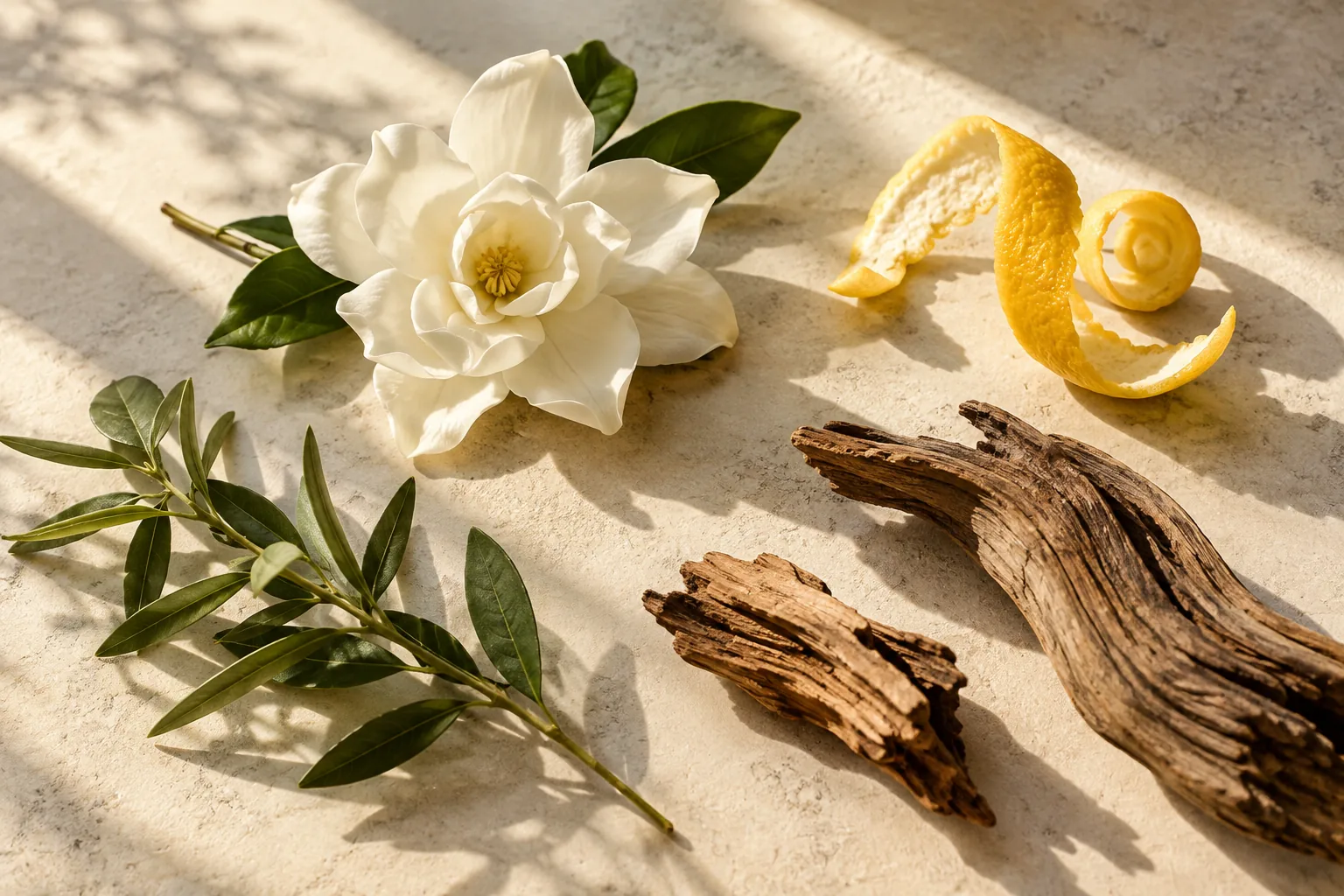
Fragrance descriptions are easier to use once you separate three things: the overall type of smell, the individual notes named, and the words describing their effect. You do not need to memorise a classification system to make a good choice.
What is a fragrance family?
A family is a broad grouping based on scent character. Think of it as a section to explore, rather than a complete description. Michael Edwards’ Fragrance Wheel is one established reference; other classification systems can organise scents differently.
A fragrance may combine several impressions. A product described as a floral with woody notes can have both a flower-like smell and a wood-like smell. Read beyond the family name to understand the direction the maker is describing.
What do floral, woody, citrus, and green mean?
The table gives everyday references for common descriptions. It is a guide to the words, not an ingredient list. Gourmand is a useful term for food-like or dessert-like impressions, although not every word below is a category from the same classification system.
- Description
- Floral
- What it suggests
- Flowers or petals
- A detail worth checking
- Fresh and leafy, sweet, or powdery?
- Description
- Woody
- What it suggests
- Wood-like smells
- A detail worth checking
- Dry, soft, smoky, or earthy?
- Description
- Citrus
- What it suggests
- Fruit peel, zest, or juice
- A detail worth checking
- Sharp and bitter, or sweeter?
- Description
- Green
- What it suggests
- Leaves, stems, or cut grass
- A detail worth checking
- Leafy, herbal, or grassy?
- Description
- Amber
- What it suggests
- A warm impression often described through resins, sweetness, or spice
- A detail worth checking
- Which of those qualities does this product emphasise?
- Description
- Gourmand
- What it suggests
- Food-like impressions such as vanilla desserts
- A detail worth checking
- How sweet does the full description suggest it will be?
| Description | What it suggests | A detail worth checking |
|---|---|---|
| Floral | Flowers or petals | Fresh and leafy, sweet, or powdery? |
| Woody | Wood-like smells | Dry, soft, smoky, or earthy? |
| Citrus | Fruit peel, zest, or juice | Sharp and bitter, or sweeter? |
| Green | Leaves, stems, or cut grass | Leafy, herbal, or grassy? |
| Amber | A warm impression often described through resins, sweetness, or spice | Which of those qualities does this product emphasise? |
| Gourmand | Food-like impressions such as vanilla desserts | How sweet does the full description suggest it will be? |
Why do the other words in the description matter?
Words such as sweet, dry, fresh, and powdery explain how the scent is being described. “Dry” usually suggests less of a sugary impression, rather than a claim about moisture. “Powdery” recalls cosmetic powder. These are sensory descriptions, not measurements.
Compare “fresh, leafy rose” with “sweet, powdery rose.” The rose reference connects them, but the surrounding words point to different experiences. If you like garden-like flowers, the first description gives you a more relevant starting sample.
Is a scent note the same as an ingredient?
No. A jasmine note describes a jasmine-like smell. It does not, by itself, tell you that the product contains jasmine extract. The same distinction applies to other notes.
Use the ingredient label and manufacturer information for ingredient questions. Use the note list to understand the fragrance description. You can learn about a scent at this level without knowing the maker’s formula.
Can a family tell me how strong a fragrance will be?
No. A woody fragrance is not automatically more intense than a floral one, and “fresh” does not establish a wear time. A family tells you about a type of smell, not how noticeable an individual product will be.
Look for product-specific information and sample where available. Keep the questions separate: “Do I like the smell?” and “Do I enjoy how noticeable this product is when used as directed?”
How do I use this information to choose?
Start with the type of smell you enjoy, then look for the qualities you prefer. “Floral, leafy, less sweet” is more helpful than simply “floral.” Read the full description before adding a product to your shortlist.
If a sample disappoints you, identify the reason. You might dislike its powderiness rather than all floral fragrances. That distinction keeps the next search focused without ruling out a whole family.
Example: reading opening, heart, and base in a description
A product is described as “citrus opening, jasmine heart, woody base.” Read this as a description of the scent’s intended progression: citrus-like smells first, a floral impression as it develops, and woody smells in the later impression.
The words opening, heart, and base help describe stages, but do not promise an exact timetable or clean separation between them. You may notice several impressions together. Nor does “jasmine heart” establish that the formula contains jasmine extract.
If you want fresh citrus throughout the experience, do not choose from the opening alone. Sample and notice whether you also enjoy the floral and woody impressions later. The description has helped you ask a better question before buying.
The family gives you a direction. The full description helps you decide what to explore within it.
How to read a fragrance description
- Find the main scent family or overall smell.
- Notice words describing sweetness, freshness, or texture.
- Read the notes as scent impressions rather than an ingredient list.
- Check strength and usage separately on the product information.
- Sample where possible before treating the description as a match.
References
Compare scent descriptions across the collection
Start with a family that interests you, then compare the full descriptions. Look for the sweetness, freshness, or texture you enjoy alongside the main scent character.
Browse ScentamyRelated reading
- Your scent style: How to discover the fragrances you enjoy
- Fragrance sampling: How to compare scents and choose a favourite
- Scent wardrobe: Choosing fragrances for everyday wear and occasions
- Jasmine scents: Understanding different floral impressions
- Vanilla scents: Choosing between sweet and softer impressions
- Woody scents: Understanding dry, soft, and smoky descriptions