Woody scents: Understanding dry, soft, and smoky descriptions
Use familiar references to distinguish the woody impressions that appeal to you.
By Pearley · Founder of Scentamy · 5 min read
Woody describes a fragrance that suggests wood-like smells. The surrounding words matter: dry, soft, earthy, and smoky point to different impressions. Start with a familiar reference you enjoy, such as a cedar drawer, then ask which part appeals. Do not read “woody” as a promise of strong scent or long wear.
The key steps
- Choose a familiar wood-like reference. Explain what appeals rather than naming a family alone.
- Read the modifiers. They describe sensory qualities rather than measured strength.
- Look at the other family or quality. Woods can appear with citrus, flowers, or sweetness.
- Check intensity separately. The family name cannot answer a product-performance question.
- Combine the wood preference with one exclusion. A clear contrast helps narrow the choice.
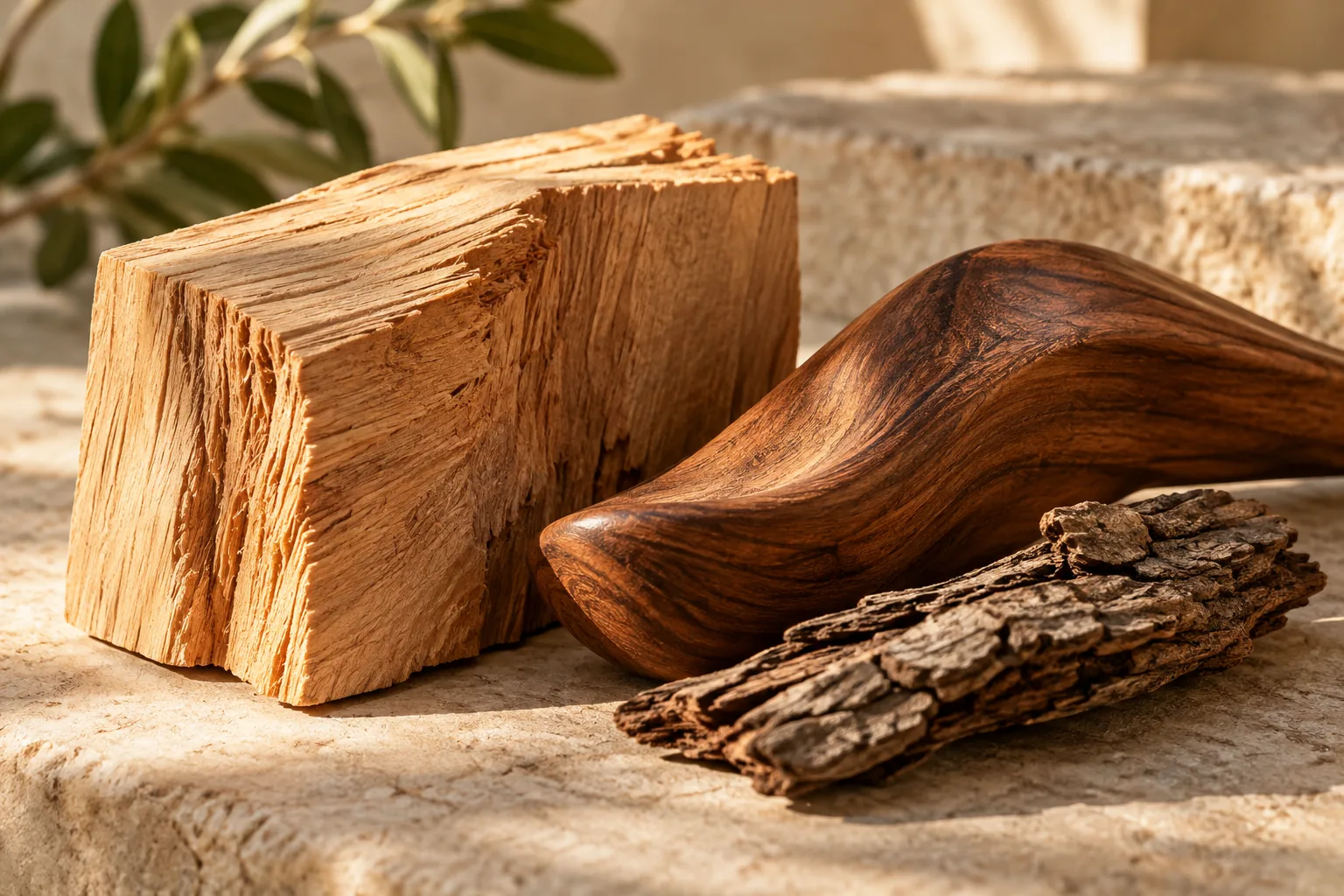
Where should I begin if “woody” feels vague?
Think about a cedar drawer or another wood smell you recognise. Do you enjoy its dry character, a softer impression, or an earthy association? You do not need to identify a botanical species.
A reference gives you vocabulary for a preference, not a demand that perfume reproduce that object exactly.
What do dry, soft, and smoky mean?
“Dry” often suggests less of a sugary impression. “Soft” describes how the writer characterises the overall smell; it does not guarantee low intensity. “Smoky” suggests a smoke-like impression.
Michael Edwards’ Fragrance Wheel includes woods and more specific woody groupings. That is one classification reference; a brand’s public wording may use a different vocabulary.
- Word
- Dry
- Question to ask
- Does this feel less sugary to me?
- Word
- Soft
- Question to ask
- Do I enjoy the overall impression when worn?
- Word
- Smoky
- Question to ask
- Do I actually want a smoke-like smell?
| Word | Question to ask |
|---|---|
| Dry | Does this feel less sugary to me? |
| Soft | Do I enjoy the overall impression when worn? |
| Smoky | Do I actually want a smoke-like smell? |
- Source: Michael Edwards: Fragrance Wheel
What does fresh woody or sweet woody mean?
These phrases describe more than one impression. A fresh woody scent and a sweet woody scent can lead you towards different candidates even though both feature woods.
Sample the whole fragrance. If you like the woods but dislike the sweetness around them, refine that distinction for your next choice.
Read phrases such as “woody base” in the context of the whole description. They often refer to a later impression, not a promise that the product smells only of wood from the beginning. If you want woods immediately, look for more detail or ask the maker.
A citrus opening followed by woods may appeal if you enjoy that contrast. If you only want the citrus, the woody part becomes a reason to sample more carefully. The same description can be useful to two people for opposite reasons.
Are woody fragrances always stronger?
No reliable intensity or wear-time rule follows from a woody label. The description tells you what the fragrance suggests, while the individual product experience tells you how noticeable it is.
If you want something quieter for shared spaces, ask for product-specific guidance and sample according to directions. Do not assume a softer word guarantees a less noticeable result.
How do I request a woody fragrance?
Try “dry woods, less sweetness, and no smoky impression.” This is more useful than asking for the strongest woody fragrance when strength is not actually your goal.
Use that description as a shortlist and let sampling revise it. You can enjoy a different woody direction without changing every preference you already know.
How do I tell whether I dislike woods or one particular effect?
Take a sample you did not enjoy and describe the objection without the family label. “It felt smoky,” “the earthy smell was too prominent,” and “it became sweeter than I wanted” are more useful than “woods are not for me.” Each suggests a different next candidate.
Then choose an alternative that addresses that objection while retaining something you liked. If the dry wood impression appealed but smoke did not, shortlist a description that emphasises dry or softer woods without promising your reaction. If no wood-like impression appealed, another family may be the better next direction.
This keeps exploration focused. You do not have to sample every woody fragrance to understand a preference, and you do not need to defend an earlier broad statement about what you dislike.
How should I choose woods for wearing versus home use?
Name the occasion and the people sharing it. For a wearable fragrance, consider the smell you want around you during the day. For a candle, consider the room and the supervised activity. A smoky impression you enjoy at home may not be what you choose for a close-contact meeting.
Do not let a gender label decide whether a wood-like smell belongs to you. What matters for the choice is whether you enjoy the full fragrance and can use the product appropriately. Likewise, “evening” wording does not require a stronger application.
Describe your intended use when asking for help: “dry woods for wearable daytime use, less sweetness” gives a clearer request than “a premium woody scent.”
Example: liking cedar but disliking smoke
You enjoy a cedar drawer and ask for a woody fragrance. A smoky sample disappoints you, even though it belongs in the broad direction you requested.
Request dry wood with less smoke next time. You have learned which woody impression you prefer, rather than discovered that woody scents are not for you.
If a second sample feels soft but sweet, you now have two exclusions: less smoke and less sweetness. Keep the dry wood preference and refine the request. This is a better next step than looking only for another product with cedar in its name.
“Woody” opens the search. “Dry woods without smoke” makes it useful.
Read a woody description
- Choose a familiar reference.
- Notice the modifiers around woods.
- Check for sweetness, flowers, or citrus.
- Separate character from intensity.
- Sample the whole fragrance.
References
Compare woody scent descriptions
Look for the wood-like qualities you enjoy within the public descriptions, then check the intended format and directions.
Browse Scentamy