Layering combinations: How to pair floral, citrus, and woody scents
Use scent qualities to choose a partner and understand what to change when a combination disappoints.
By Pearley · Founder of Scentamy · 6 min read
Choose a pairing by the effect you want: citrus beside flowers for a fresher impression, woods beside citrus for a different finish, or flowers beside woods for more floral character. These are directions to try, not guaranteed matches. Begin with fragrances you enjoy separately, then notice whether the combination preserves the qualities you wanted.
The key steps
- Name what you want to change. Choose one quality to preserve and one to add.
- Try freshness beside a floral. Notice whether the flower still comes through.
- Try woods beside citrus. Check whether the added smell overwhelms the freshness.
- Try flowers beside woods. Compare sweetness as well as the floral note.
- Change the dominant partner first. Reduce it or choose another before increasing both products.
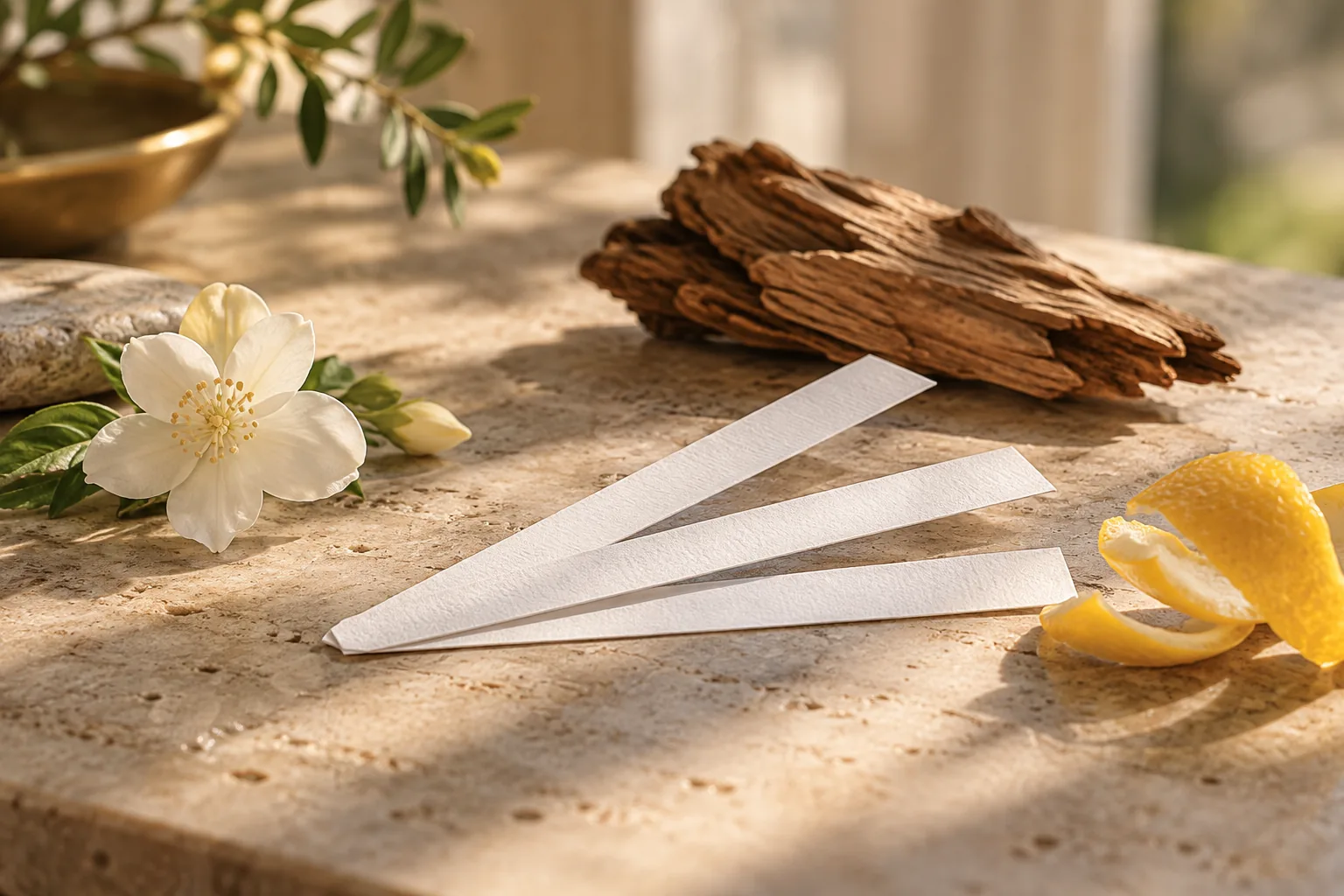
The application method belongs in the main layering guide. Here, the focus is choosing the partner and interpreting what you smell once the two fragrances are together.
How do I choose a combination rather than guess?
Describe your favourite in ordinary words. “Fresh citrus, a little sharp” gives you something to work with. Then name the difference you want: a woody smell alongside it, or less sharpness.
A pairing can add another impression without correcting every quality you dislike. If the original is unpleasant to you on its own, trying a different fragrance may be more useful than layering to rescue it.
Start with one pairing rather than several at once. If you compare a floral with citrus, woods, and another floral in a single wearable application, the result cannot show you which partner made the useful difference.
Give each attempt a clear question: “Can I add woodiness while keeping the citrus noticeable?” That lets you describe a successful result and an unsuccessful one using the same criterion.
What should I notice in a floral and citrus pairing?
Start with the floral you enjoy and smell the citrus partner separately. If both already feel very sweet, the combination may lean sweeter than the freshness you hoped for.
Try the pairing lightly according to the product directions. Ask whether you can still recognise the flower and whether you like the citrus beside it. A sharp edge that distracts from the floral is a reason to try a different citrus partner.
What should I notice when adding woods to citrus?
A woody partner offers another smell beside the citrus, but “woody” covers many impressions. Dry, soft, smoky, and earthy descriptions give different starting points.
If keeping the citrus noticeable matters most, watch for the woods taking over. Reduce the woody product on a later attempt. If that still changes too much, the composition may be the wrong partner for your goal.
Can a floral perfume work with a woody mist?
Yes, as a possibility to explore. Compare whether the floral is fresh, powdery, or sweet, and decide which of those effects you actually want alongside the woods.
The flower name is not enough to predict the result. Two jasmine fragrances can behave differently in a pairing because the rest of their scent character differs. Smell the complete products rather than pairing isolated note names.
- Goal
- Keep flowers fresh
- Direction to try
- A citrus or green-smelling partner
- Reason to reconsider
- The partner adds sharpness or hides the flowers
- Goal
- Add woodiness to citrus
- Direction to try
- A woody partner you find soft
- Reason to reconsider
- The citrus becomes difficult to notice
- Goal
- Add flowers to woods
- Direction to try
- A floral partner with your preferred sweetness
- Reason to reconsider
- The pairing becomes sweeter or more powdery than you wanted
| Goal | Direction to try | Reason to reconsider |
|---|---|---|
| Keep flowers fresh | A citrus or green-smelling partner | The partner adds sharpness or hides the flowers |
| Add woodiness to citrus | A woody partner you find soft | The citrus becomes difficult to notice |
| Add flowers to woods | A floral partner with your preferred sweetness | The pairing becomes sweeter or more powdery than you wanted |
What if every combination feels muddled?
Return to wearing each fragrance separately. With two complex products, there may be too many competing impressions for the effect you want. A simpler-feeling partner is another option, but separate use is a valid decision.
Keep notes about what changed rather than labelling entire families incompatible. “This perfume hid the citrus” is useful; “citrus and woods never work” goes further than your observation.
Why does sweetness matter even when I match fragrance families?
A floral perfume can be sweet, and a woody perfume can also be sweet. Combining by family name alone can therefore miss the quality that becomes most prominent. Smell each separately and ask how much sweetness you notice before trying the pairing.
If you enjoy sweetness in one product but not doubled in the combination, reduce the dominant product on another attempt or choose a partner you find less sweet. The goal is the balance you prefer rather than a rule that sweet scents must always be opposed.
Likewise, a less sweet partner does not automatically remove sweetness from the original. Treat contrast as a direction to explore, not a guaranteed correction.
How do I choose the next attempt after a disappointing pairing?
Name the specific problem first. If the perfume hides the mist, change the amount or partner. If both remain noticeable but you dislike the combination, separate use may be the better outcome. If the pairing is pleasant but too similar to the original, ask whether you need the extra step.
Keep the parts that worked. You might preserve the floral mist and change the citrus partner rather than replacing everything. On a later attempt, keep the other conditions reasonably similar so the difference is easier to understand.
Stop when the method is no longer helping you choose. Layering is optional, and owning two fragrances does not oblige you to wear them together.
Example: choosing a different floral partner
Your woody mist feels dry. You try a sweet floral perfume, hoping for flowers, but mostly notice added sweetness.
Try less perfume first if you still like its floral smell. If the sweetness remains the main change you dislike, shortlist a less sweet floral and smell it on its own before attempting a new combination.
You have identified the effect that did not suit you. You have not proved that woody and floral scents are incompatible.
A useful note after the attempt might be “the flowers remained noticeable, but sweetness became the main change.” That tells you why a different floral partner may be worth trying. It is more specific than saying the pairing was bad.
Pair the qualities you want to experience, rather than matching note names alone.
Choose your next pairing
- Name the favourite you want to preserve.
- Choose one effect to add.
- Smell the partner separately.
- Try a light permitted application.
- Describe what changed before choosing the next adjustment.
Find a body mist to build around
Choose from public scent descriptions. These pairing directions are suggestions to explore, not tested claims about named Scentamy products.
Browse Scentamy