Fragrance layering: How to layer body mist and perfume
Learn what layering means, how to try two fragrances together, and how to fix a pairing that feels too strong or muddled.
By Pearley · Founder of Scentamy · 6 min read
Layering means wearing two fragrances together. For a first attempt, choose a body mist you already enjoy and a perfume that adds something you want, such as a woody smell alongside citrus. Begin lightly, following both products’ directions. The important question is whether you enjoy the combined smell more than either fragrance on its own.
The key steps
- Choose the fragrance you want to keep noticeable. Start with a mist you already enjoy and decide what the perfume should add.
- Smell each product separately. Notice sweetness, freshness, flowers, or woods rather than relying on matching notes.
- Try the two scents together. Use separate scent strips where permitted, then a light wearable application following both products’ directions.
- Adjust the fragrance that takes over. Try less of the dominant product next time instead of adding more of both.
- Decide whether the combination is worth wearing again. Check the later smell too; layering does not guarantee longer wear.
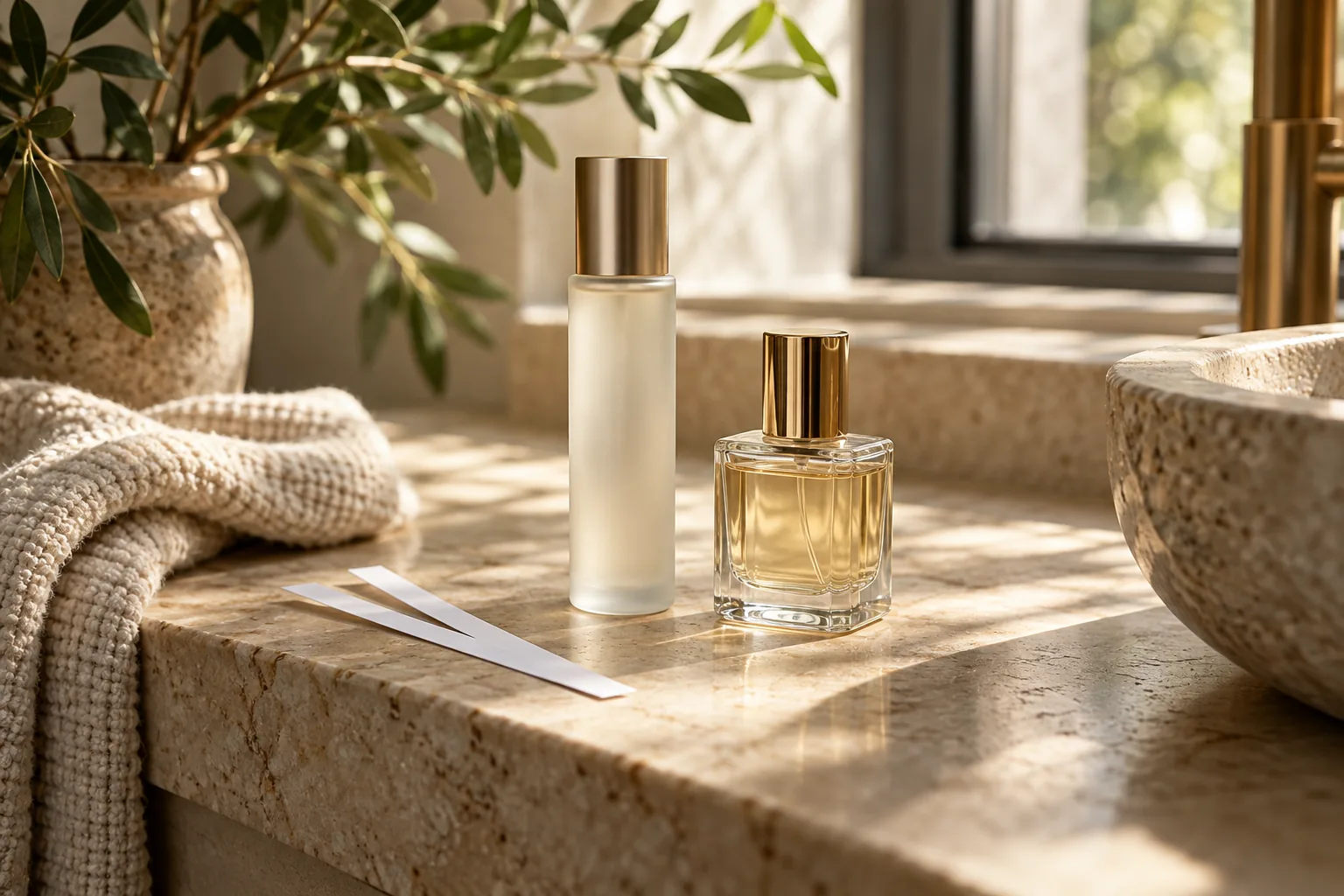
You can explore layering with products you already own. A matching note is not essential, and two fragrances sharing a note are not automatically a good pair. Smelling them separately first helps you understand what each one brings.
What should the second fragrance add?
Choose the fragrance you want to recognise most clearly. If it is your citrus mist, ask what you like about it: the smell of peel, its freshness, or its sweetness. Then decide what you wish were different.
For example, you might want a woody smell alongside the citrus while keeping the fresh impression. That gives the perfume a specific purpose. If it overwhelms the citrus completely, it has changed the part you wanted to keep.
My advice is to begin with a simple goal. Trying to add flowers, woods, sweetness, and spice at once makes it harder to understand why the combination does or does not appeal.
Compare sweetness, freshness, and texture—not just notes
A note is a named smell within a fragrance, such as rose or vanilla. It gives you a clue, but it does not describe everything about the finished scent. Two vanilla fragrances can differ: one may smell like dessert, while another feels less sweet and more woody.
Smell each product separately and use ordinary words. Sweet, fresh, floral, woody, and powdery are enough to begin. “Powdery” describes a smell reminiscent of cosmetic powder; “green” suggests leaves or stems. You do not have to identify every note.
- What you want
- Keep a floral mist smelling fresh
- A direction to explore
- A fresh or leafy-smelling partner
- What to notice
- Can you still notice the floral smell you enjoy?
- What you want
- Add a woody smell to citrus
- A direction to explore
- A softer woody perfume
- What to notice
- Does the citrus still smell fresh to you?
- What you want
- Make a sweet pairing less sugary
- A direction to explore
- Try a less sweet partner
- What to notice
- Do you prefer the combination, or the sweet fragrance alone?
| What you want | A direction to explore | What to notice |
|---|---|---|
| Keep a floral mist smelling fresh | A fresh or leafy-smelling partner | Can you still notice the floral smell you enjoy? |
| Add a woody smell to citrus | A softer woody perfume | Does the citrus still smell fresh to you? |
| Make a sweet pairing less sugary | Try a less sweet partner | Do you prefer the combination, or the sweet fragrance alone? |
How can I try the pairing before wearing it?
If the directions permit sampling on scent strips, apply each fragrance to its own labelled strip. Smell them separately, then bring the strips near one another. This lets you explore the combined smell without a full wearable application.
Notice what happens when the strips are together. If you mostly smell the perfume, it may be too dominant for the result you wanted. If the combination interests you, the next step is a light wearable trial using only products intended for skin and following their directions.
A strip comparison cannot tell you exactly how the pairing will smell when worn. Treat it as a way to decide what is worth trying. Do not substitute linen spray or another home fragrance for a body mist.
How much to apply, and which fragrance to use first
Start with a light application within the directions for both products. There is no universal spray count: sprayers and fragrances differ, so “three sprays of mist and one of perfume” is not a dependable rule for every combination.
You can try mist followed by perfume first. That is an order to explore, not a requirement. If the perfume dominates, try less of it on another day before changing the products or applying more mist.
Changing one thing at a time helps you understand the result. If you later try the reverse order, keep the amounts similar. If neither order makes a difference you care about, use the routine that is easiest for you.
What if the combination smells too strong or muddled?
If one fragrance takes over, reduce that product next time or choose a less dominant partner. Adding more of the other scent can simply make the overall application heavier.
If you cannot recognise what you liked in either fragrance, wear them separately again. You may enjoy both without enjoying them together. A successful pairing is optional; stop using any product that irritates your skin.
Will layering make the fragrance last all day?
Layering does not guarantee a particular wear time. It may change what you smell without giving a predictable increase in longevity.
Check the combination later rather than judging only the first application. If you still enjoy it and want to wear it again, you have found a useful pairing. If you prefer either product alone, there is no reason to keep combining them.
Example: keeping citrus noticeable beside a woody perfume
You like the smell of your citrus mist but would enjoy a little woodiness beside it. You have a woody perfume, so you smell each separately before trying them together. In the first light wearable attempt, the perfume is mostly what you notice.
The next decision is to reduce the perfume, not increase both products. Try again on another day within the product directions, keeping the mist application similar. If the citrus is easier to notice and you enjoy the result, that adjustment has helped you keep the part you liked.
If less perfume still leaves you missing the mist on its own, change the partner or stop layering. This is a preference decision: it does not establish that citrus and woods cannot work together, or that the combination lasts longer.
The second fragrance should add something you want without losing what you love about the first.
A simple first layering attempt
- Choose a mist you enjoy on its own.
- Decide what you want the perfume to add.
- Smell each fragrance separately before trying them together.
- Use a light application of skin-intended products, following their directions.
- If you try again, change one thing and notice what improves.
Body mists to explore for layering
Looking for a body mist to build around? Read the full scent description and choose a character you enjoy on its own. A good layering partner begins as a fragrance you like wearing.
Browse ScentamyRelated reading
- Fragrance sampling: How to compare scents and choose a favourite
- Your scent style: How to discover the fragrances you enjoy
- Scent wardrobe: Choosing fragrances for everyday wear and occasions
- Layering combinations: How to pair floral, citrus, and woody scents
- Body mist vs perfume: How to choose between them