Fragrance longevity: Understanding why your scent seems to fade
Separate a changing smell, reduced awareness, and actual wear expectations before deciding to reapply.
By Pearley · Founder of Scentamy · 6 min read
Not noticing your fragrance can mean more than one thing. The smell may have become fainter, its most noticeable qualities may have changed, or repeated exposure may have reduced your awareness of it. Before reapplying, pause and consider which observation you actually have. Use the product’s directions rather than treating loss of awareness as permission to add more.
The key steps
- Separate awareness from absence. Not smelling it yourself does not establish that no one else can notice it.
- Compare the first and later smells. A missing citrus impression is not necessarily the end of the whole fragrance.
- Check the actual product information. A concentration term or note list is not an hourly guarantee.
- Pause before applying more. Follow the directions and consider people nearby.
- Choose by the full wearing experience. Enjoyment matters alongside how long you notice it.
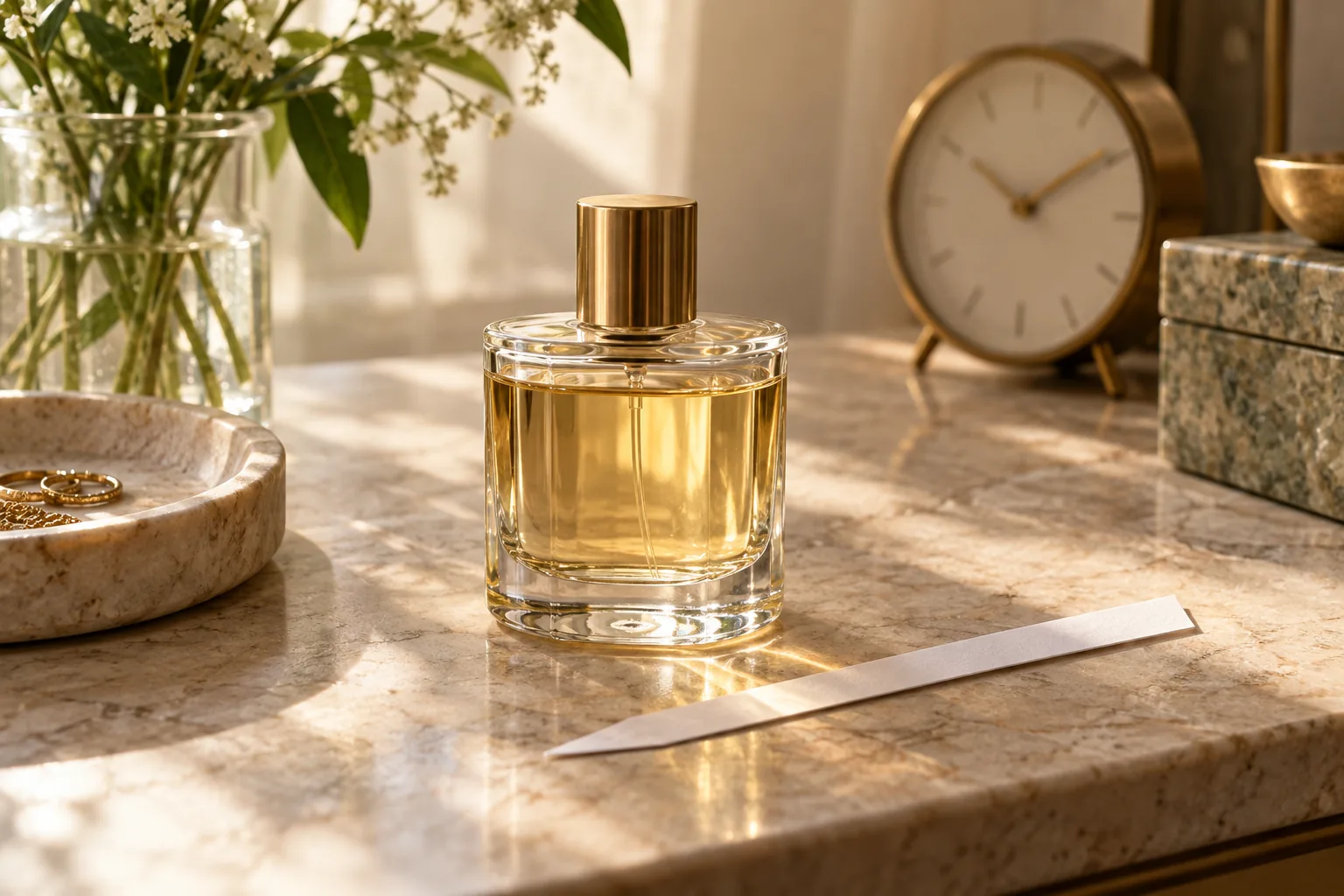
Longevity means how long the fragrance remains noticeable; projection describes how far away it is noticeable. A scent can feel quieter without necessarily disappearing. Neither can be established for every product from its family name.
What does “nose blindness” mean?
People use “nose blindness” informally for reduced awareness of a smell after exposure. Olfactory adaptation is a studied phenomenon in which perception can decrease with repeated exposure. This explains one possible reason for noticing less; it does not diagnose what happened to your particular perfume.
A break from deliberately checking the scent is more useful than repeatedly smelling the same application and spraying again each time. Someone else’s impression may offer context if they are comfortable commenting, but it is not a measurement of wear time.
Why does the fragrance smell different later?
The first smell is the opening; the later impression is often called the dry-down. A bright citrus impression may become less prominent while other impressions remain noticeable. Record what you still smell rather than asking only whether the first smell is unchanged.
If you love the opening but dislike the later scent, a different product may fit you better. Repeatedly adding more to restore the opening can also increase the overall amount you are wearing.
Compare the first and later impressions with the sampling guide.
Can I predict wear time from eau de parfum or body mist?
No universal hourly promise follows from either label. IFRA describes familiar concentration names as general terms rather than fixed definitions. Read any product-specific information and assess the actual experience.
Avoid using strength as a substitute for preference. A fragrance that remains noticeable longer is not useful to you if you dislike its later smell. Decide whether longer wear is a real need, then look for evidence relevant to that product.
Treat online wear-time reports as observations in someone else’s context, not specifications for your routine. Their amount, setting, and way of noticing fragrance may differ from yours. A statement with no context tells you less than one explaining how the product was used.
If longevity matters to your purchase, ask the maker what information they have for that exact product. Keep any answer separate from the question of whether you enjoy its later smell.
When should I reapply?
Follow the individual directions and think about the setting. If you cannot tell whether the fragrance has faded or you have simply stopped noticing it, do not make repeated additions your default response.
Keep an ordinary note of when you applied and when you checked again. You do not need to turn everyday wear into an experiment, but the context prevents “it vanished” from describing several different situations. Stop use if irritation occurs.
What is a useful result when comparing longevity?
A useful observation names the product, permitted application, setting, and what you noticed later. “After my usual directed application, I still noticed woods later but little citrus” tells you more than “it does not last.”
Use that information to choose whether the smell suits your routine. Do not extrapolate your observation into a guaranteed wear time for everyone or assume layering will solve it.
How can I compare two fragrances without confusing strength and longevity?
Use each according to its own directions on separate occasions, and write the first and later impressions. Do not compare a newly sprayed sample with one worn much earlier and conclude that the new one lasts longer.
Also separate “noticeable from farther away” from “still noticeable later.” Those are different observations. A fragrance that feels prominent at first may become quieter, while another may remain close to you in a way you enjoy.
There is no need to turn this into a claim of scientific measurement. Ordinary notes can still answer your purchase question if they describe the product, use, and preference honestly.
What should I do if I enjoy the opening but not the later smell?
Use that difference to choose another sample. If the later woody impression is what disappoints you, ask for a fragrance whose complete description points towards qualities you enjoy later as well as at first.
Do not make frequent reapplication the only solution. It may change the total amount without resolving your dislike of what remains. Follow the directions and consider the people nearby before any addition.
You may decide to keep the fragrance for a shorter occasion, within appropriate use, or simply not repurchase it. The useful outcome is understanding your preference rather than proving that the product failed.
Example: losing the citrus, not necessarily the entire scent
You notice fresh citrus immediately after application. Later, you say the fragrance has disappeared, but on a calmer check you can still notice a softer woody smell.
Your next question is whether you enjoy that later smell. If you do, the product may still suit you. If you wanted a citrus impression throughout, use that preference when sampling alternatives.
Neither conclusion requires adding more straight away, and neither establishes a general wear-time claim.
If you write “citrus at first, soft woods later; enjoy both,” you have a reason to keep wearing it. If you write “miss the citrus and dislike the woods,” you have a reason to sample differently. Neither observation gives a universal hour count.
Notice what remains before deciding that the fragrance has gone.
Before reapplying
- Distinguish a changed smell from no smell.
- Consider reduced awareness after exposure.
- Check the product directions.
- Consider the shared setting.
- Use the full wearing experience to decide whether the product suits you.
References
Choose wearable fragrance by the experience you enjoy
Compare individual descriptions and directions. Do not choose a scent family expecting it to guarantee a particular number of hours.
Browse Scentamy