Fragrance storage: Caring for perfumes and body mists
Choose a practical storage place and know what to check if a product changes.
By Pearley · Founder of Scentamy · 5 min read
Store fragrance according to its label, away from heat and direct light, with the closure secure. Keep the bottle information readable so you can check use and storage details later. If the product leaks or its appearance or smell changes in a way that concerns you, ask the maker rather than trying to repair or reformulate it.
The key steps
- Choose a place away from heat and light. Follow any more specific conditions on the label.
- Keep the closure secure. Protect the bottle and retain its information.
- Check the actual container. Portability is a product detail, not a guarantee from bottle size.
- Ask about changes you cannot interpret. Appearance alone is not a complete diagnosis.
- Make it easy to return the bottle to its place. A consistent habit is more useful than a complicated setup.
Where should I store the bottle?
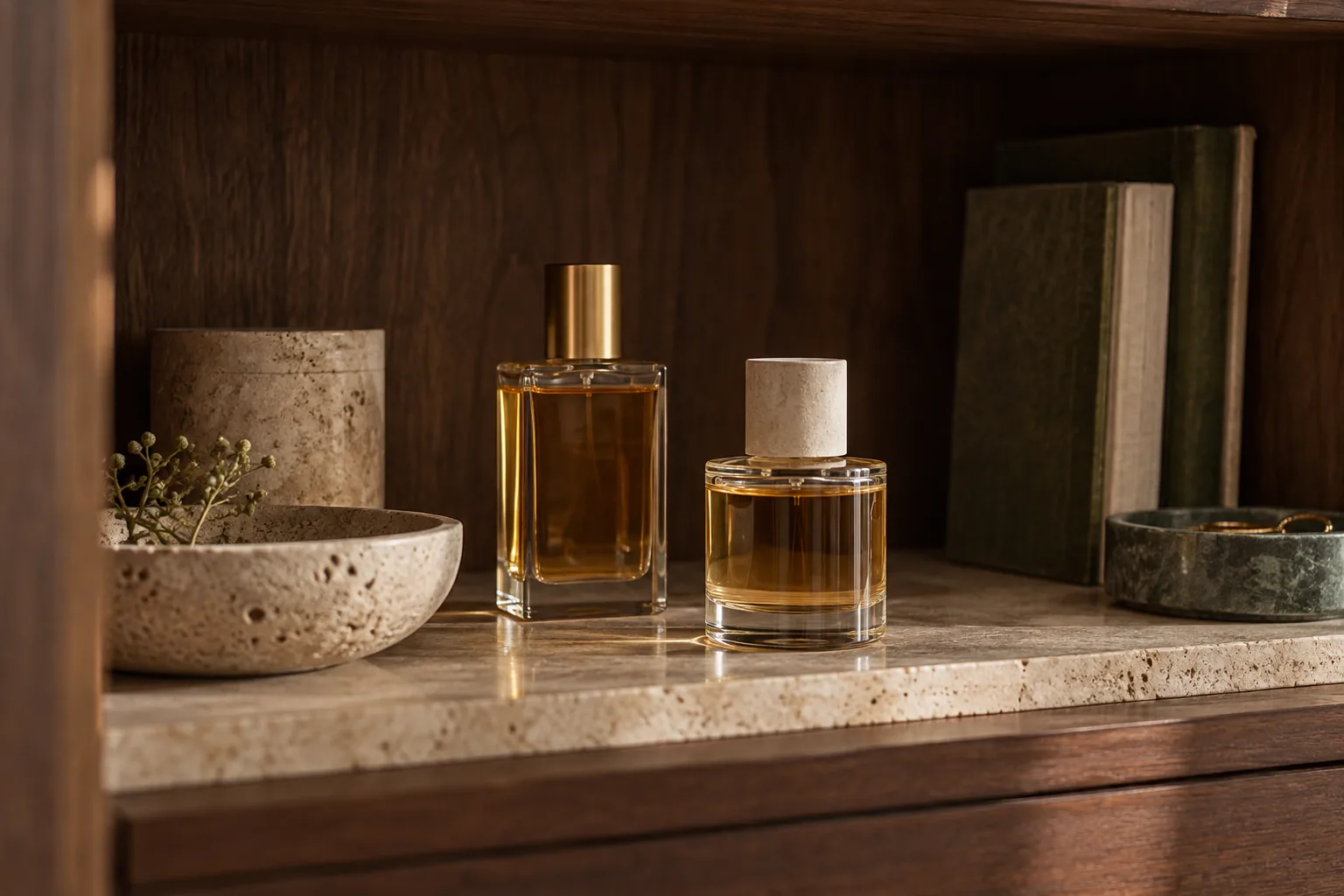
CHANEL advises keeping its fragrances away from heat and light, tightly sealed, and preferably in their packaging. This is useful manufacturer guidance; the directions for your particular perfume or mist remain the reference.
A sunny display shelf or a bottle left in a hot car is a poor default. Choose a practical place where you can maintain the conditions the maker specifies.
Do the cap and packaging matter?
Replace the cap or closure as designed after use. Do not force a damaged sprayer, transfer contents to an unsuitable container, or leave an open bottle because the cap is inconvenient.
Keep the original packaging if it contains instructions you need. A photograph of the label can be useful for your own reference, but retain any batch details that help the maker identify the product.
How should I think about carrying fragrance?
Check that the closure is secure and that the product can be carried within its directions. Do not assume every mist bottle is leak-proof or suitable for a warm vehicle.
For travel rules, check the current carrier and destination requirements separately. An editorial storage guide cannot establish what is allowed on a particular journey.
Does a change in colour mean it is unusable?
There is no universal visual test that establishes the condition of every fragrance. Check any expiry or period-after-opening information supplied, and describe concerning changes to the maker.
Include the product name, batch details where available, when you opened it, and how it was stored. Do not add water, fragrance oil, or another product to correct a changed smell.
Separate the condition question from the preference question. You may have grown less interested in a scent without the product being damaged. Conversely, leaking packaging or a concerning change deserves attention even when you still like the smell.
Do not use age alone to invent a shelf-life rule. Check the information supplied for the product and provide opening and storage details when asking the maker about uncertainty.
How do I keep storage simple?
Keep frequently used products accessible within suitable storage conditions. Put them back after applying instead of leaving them in changing light or heat throughout the day.
You do not need to assume refrigeration or a specialist cabinet is necessary. Follow actual instructions and ask the maker about uncertainty.
Is the bathroom always the wrong place to store fragrance?
Judge the actual location against the label rather than making a rule from the room name. A bottle near a hot shower, heating source, or direct light is different from a storage space with suitable conditions. The maker’s requirements decide whether the location fits.
If the conditions change often or you cannot keep the bottle away from heat, choose a more suitable place. A practical storage habit is one you can maintain after every use, not just immediately after buying.
Do not assume another room is suitable simply because it is called a bedroom. A sunny windowsill there can still conflict with storage directions.
What details should I keep if I need to ask about the bottle?
Keep the product name, batch information where supplied, and the label instructions. Make a note of when you opened it if that matters to information on the packaging. These details help distinguish the actual product from a general fragrance question.
If there is a problem, explain the change, how it was stored, and whether the closure or sprayer is damaged. A photograph of the bottle and label can help the maker understand what you have.
Avoid testing fixes by adding another liquid or dismantling the sprayer. The aim is to understand the condition and obtain appropriate guidance, not to reconstruct the product at home.
Example: moving a bottle from a sunny shelf
Your favourite bottle sits beside a window because you like seeing it there. Its label advises keeping it away from direct sunlight.
Move it to a suitable shelf or drawer and keep the closure secure. If its smell has already changed in a way that concerns you, ask about that bottle’s condition rather than assuming better storage reverses the change.
Keeping the packaging or label also makes a later question easier to answer. You can explain which product it is and how it was stored instead of asking about an unidentified bottle.
Store for the product’s needs, not just the appearance of the bottle.
A practical storage check
- Read the product’s storage directions.
- Keep it away from heat and direct light.
- Secure the closure after use.
- Retain readable product and batch information.
- Ask about concerning changes rather than altering the contents.
References
Choose a wearable fragrance you will enjoy using
Read storage and application information alongside the scent description before buying.
Browse Scentamy